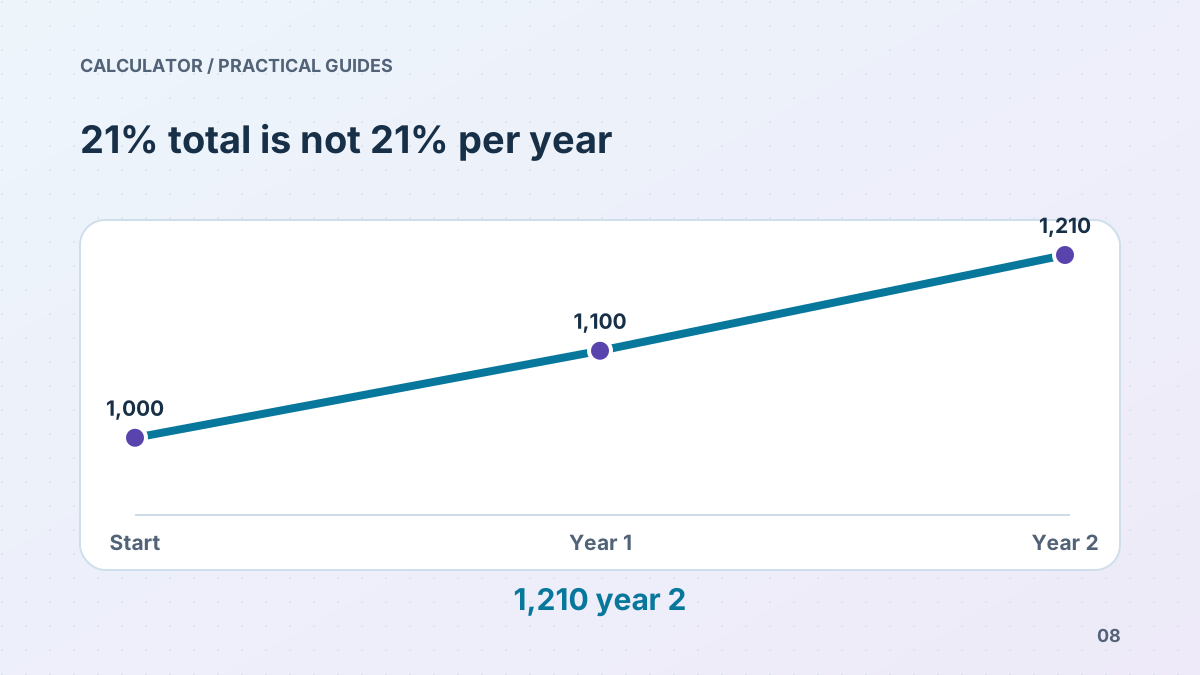
A value grows from 1,000 to 1,210 in two years. The total increase is 210, or 21%. Its equivalent compound annual growth rate is 10%, because 1,000 × 1.10 × 1.10 = 1,210.
Total return describes the whole period. An annualized measure expresses growth on a yearly basis under specified assumptions. Confusing the two can make a multi-year result look much larger than it is.
Start with the total percentage change
Use total change = (ending value − beginning value) ÷ beginning value × 100. In the example, (1,210 − 1,000) ÷ 1,000 × 100 = 21%.
That calculation compares two values. It does not automatically include distributions, transaction costs, or taxes. If you call a number a total investment return, be clear about which cash amounts the calculation includes.
Calculate an equivalent compound annual rate
With a positive beginning value, a positive ending value, and a period of t years, the common CAGR formula is (ending ÷ beginning)1/t − 1. Multiplying by 100 expresses the result as a percentage.
For two years, (1,210 ÷ 1,000)1/2 − 1 = 0.10. Dividing the total 21% by two would give 10.5%, which is not the equivalent compounded annual rate.
The time period matters. The same ending value reached in one year and in four years has the same total change but a different annualized rate. State the dates or the year convention used for the calculation.
The equivalent rate does not describe the path
CAGR does not mean the value rose by exactly 10% in each year. Many different paths can connect 1,000 and 1,210. A first-year fall followed by a large rise could end at the same number.
This is why an annualized result does not describe volatility or the experience of holding the asset. It summarizes the endpoints and elapsed time. It also does not promise that a similar rate will continue.
Contributions and withdrawals change the problem
If you add 200 halfway through, an ending balance of 1,210 cannot be treated as growth of the original 1,000 alone. Some of the increase is your deposit, and its timing matters. A simple endpoint CAGR would mix contributions with growth.
To assess a situation with cash flows, you need a method appropriate to the question, such as one that accounts for their timing. Do not label the result from a no-contribution calculator as your actual return when that assumption does not hold.
For a transparent comparison, record beginning value, ending value, period length, distributions, contributions, withdrawals, and costs. Use CAGR only where its assumptions fit. This article explains arithmetic and is not a recommendation to buy, sell, or choose a financial product.
Try the calculation
Use the CAGR Calculator with your own inputs. Check units, assumptions, and the worked example before interpreting a result.