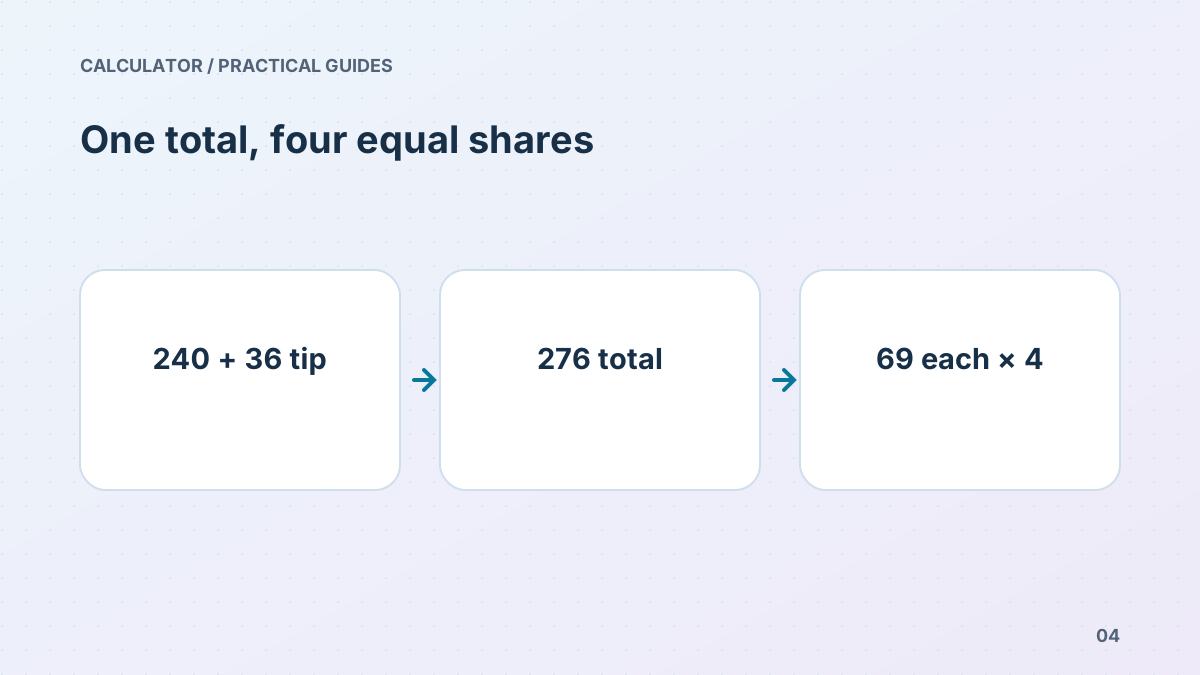
Four people share a bill of 240 and agree to add a 15% tip. The tip is 36, the total is 276, and an equal split is 69 per person. The method is simple when you calculate one total first and divide only afterward.
Confusion usually comes from applying the tip twice, leaving out an existing service charge, or rounding each person’s contribution without checking the sum. A short written breakdown prevents most of those problems.
Calculate the agreed tip base
Use tip = agreed base × tip percentage ÷ 100. If the base is 240 and the percentage is 15, the calculation is 240 × 0.15 = 36. Add that once to the amount due.
The agreed base may differ from the final receipt total. People may choose to tip on food before tax, or on the full bill. There is no arithmetic shortcut that decides that choice for you. Check the receipt and agree on the base before entering it.
Also check whether the receipt already includes a service charge. If you want to add a separate tip, decide its amount explicitly. Do not mistake an existing charge for an unpaid portion of the bill.
Divide the total, then verify it
For equal shares, use share = complete total ÷ number of people. In the example, 276 ÷ 4 = 69. Multiplying the share back by four should recover the total.
If the bill is 100 and three people share it, each exact share is 33.333… . Three payments of 33.33 add to 99.99, leaving one cent. One person can pay 33.34 while the others pay 33.33. The allocation is slightly unequal but the bill is settled exactly.
Unequal orders require a different plan
If one person ordered much more, an equal split may not be the arrangement everyone wants. Separate personal items from shared items. Allocate shared costs by the agreed number of people, then add each person’s own items.
For proportional allocation, a person whose items account for 25% of the agreed subtotal can cover 25% of the shared tip or relevant charges. Keep taxes and fees consistent with the arrangement rather than distribute them differently by accident.
Keep repayments distinct from the restaurant payment
If one person pays the restaurant, their own share remains part of the total. The other three reimburse that payer; they do not split the entire bill among only three people unless that is deliberately agreed.
Payment services may introduce fees or minimum transfer amounts. Include those separately when needed, and check the final list of transfers against the receipt. A calculator can establish the numbers, but the people sharing the cost still need to agree on the tip base, the split method, and how to handle a rounding remainder.
Try the calculation
Use the Split Bill Calculator with your own inputs. Check units, assumptions, and the worked example before interpreting a result.