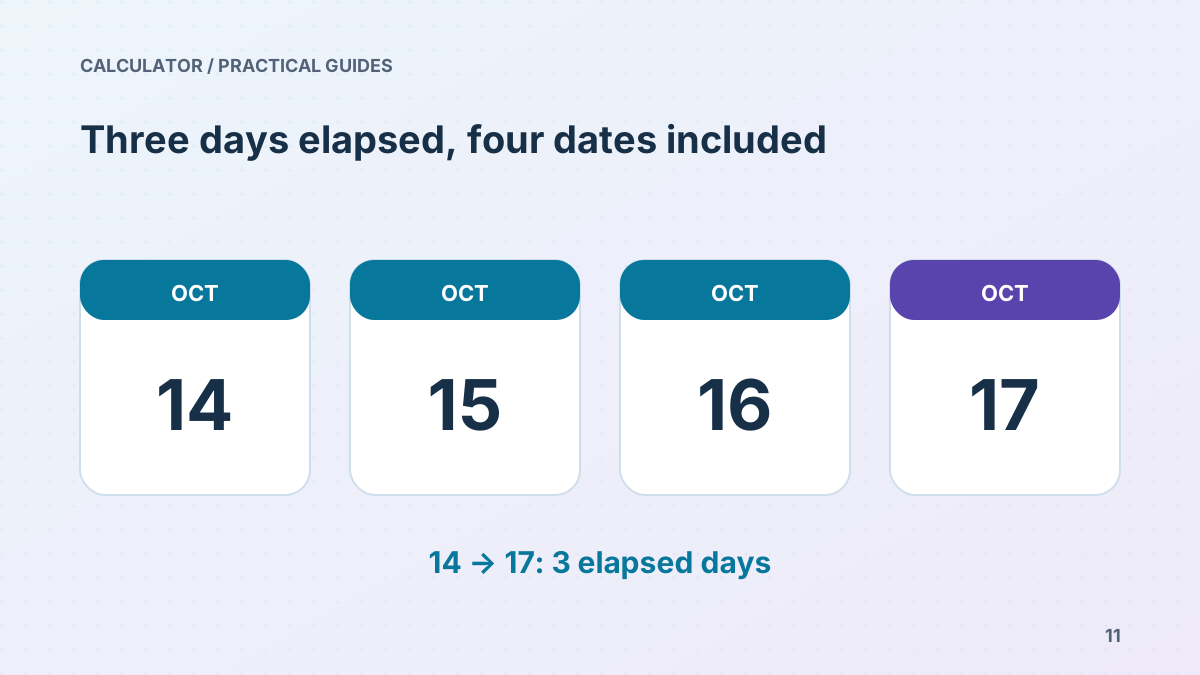
From October 14 to October 17, three days elapse. If you count October 14, 15, 16, and 17 as included dates, you count four dates. Both answers are possible because they describe different things.
Before using a date calculator, decide what the result needs to represent. A length of time, a list of included dates, and a working-day deadline are separate calculations. Choosing the counting rule first prevents a one-day error later.
Elapsed days measure the interval
For plain calendar dates, elapsed days count the steps from one date to the other. October 14 to October 15 is one day; October 14 to itself is zero days. October 14 to October 17 is therefore three days.
This approach is useful for comparing dates or describing the number of calendar days between two boundaries. A three-night stay starting October 14 and ending October 17 also has three overnight intervals, although its check-in and check-out times are separate details.
Inclusive counting includes both endpoints
When the dates are in forward order and you want to count every included calendar date, use inclusive count = elapsed days + 1. For October 14 through October 17, that gives 3 + 1 = 4.
For a same-date event, the elapsed difference is zero but the inclusive count is one. If a form asks how many calendar dates an event runs across, the inclusive answer may be appropriate. If it asks for elapsed time, adding one would change the meaning.
Do not use the shortcut blindly with reversed dates. Confirm the date order and whether a signed difference, an absolute difference, or an inclusive range is required.
Working days require a calendar
Working-day counts exclude days according to a chosen schedule. That might mean weekends plus public holidays, but working weeks and holidays vary by location and organization.
A general date-difference tool cannot infer those rules from two dates alone. For an employment, school, payment, or filing deadline, use the controlling calendar and its endpoint rules. Do not label an ordinary calendar-day result as a business-day result.
Calendar dates are not always 24-hour durations
Two consecutive local dates can span a daylight-saving clock change. A local midnight-to-midnight interval may therefore differ from exactly 24 elapsed hours. A calendar-day count and a timestamp duration can produce different numbers without either calculation being broken.
If your question involves flight times, timed events, or server logs, include times and time zones. If it involves dates printed on a calendar, a date-only count is often the relevant measure.
Write your conclusion with its rule: “three elapsed calendar days,” “four dates including both endpoints,” or “three working days using this holiday calendar.” That short description makes the result far more useful than an unlabeled number.
Try the calculation
Use the Date Difference Calculator with your own inputs. Check units, assumptions, and the worked example before interpreting a result.