Simple interest uses the original principal as its interest base. Compound interest adds credited interest to the balance, so later interest can be calculated on a larger amount. A year-by-year example makes that difference easier to see than a formula alone.
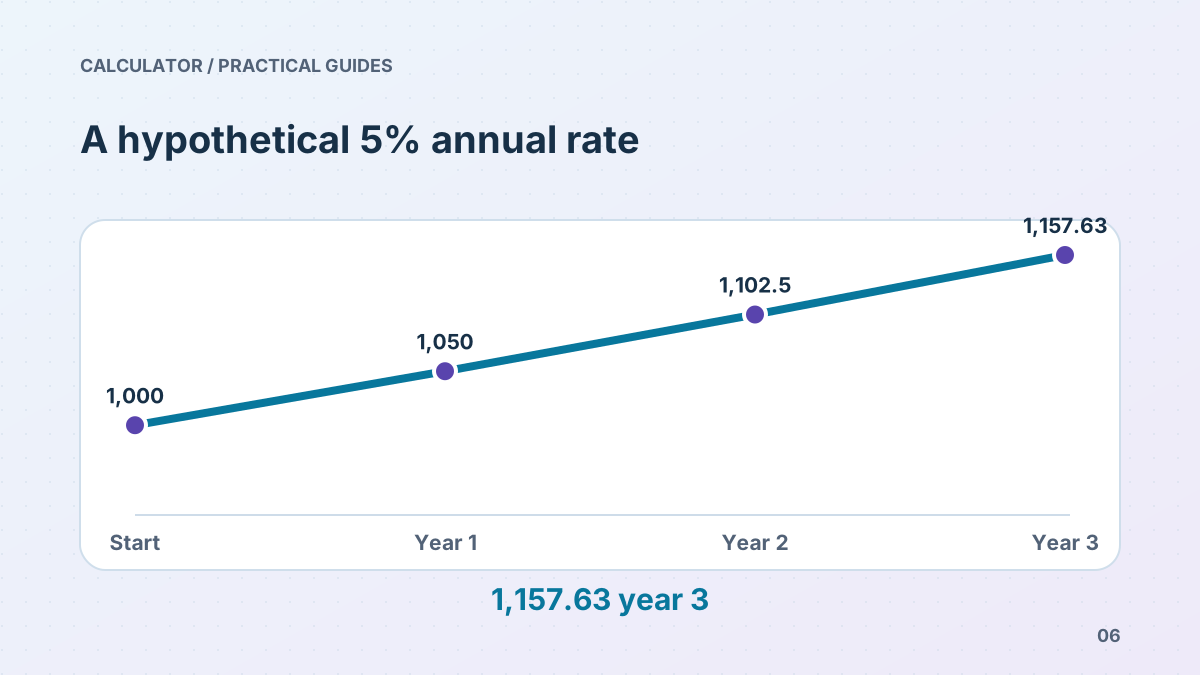
Consider a hypothetical starting balance of 1,000 at a fixed 5% annual rate for three years, with no fees, taxes, withdrawals, or extra deposits. This is an arithmetic illustration, not a forecast or a statement about an available product.
Simple interest keeps the same base
The formula is interest = principal × annual rate × years. With the rate written as 0.05, the interest is 1,000 × 0.05 × 3 = 150. The principal plus interest is 1,150.
Each year contributes 50 in this simplified example. The interest already earned does not join the calculation base. Changing the starting amount or the time changes the answer, but the model still applies the rate to the original principal.
Compound interest updates the balance
With annual compounding, the first year ends at 1,000 × 1.05 = 1,050. The second ends at 1,050 × 1.05 = 1,102.50. The third ends at 1,102.50 × 1.05 = 1,157.625, or 1,157.63 when rounded to two decimals.
The formula for annual compounding is future balance = principal × (1 + rate)years. The extra 7.625 compared with simple interest comes from interest calculated on earlier interest.
Keep the full balance between stages when illustrating the formula. A real account may round credited interest or use day-count conventions that make its statement differ slightly.
Compounding frequency and contributions matter
For a nominal annual rate r compounded n times a year over t years, a common model is P × (1 + r/n)nt. Use a decimal rate and keep the rate convention consistent. A quoted effective annual rate is already a different way of describing the annual result.
Extra deposits require additional terms because each deposit has its own time to earn interest. A deposit made at the start of a month and one made at the end do not have identical timing. Do not treat every contribution as if it existed for the full investment period.
Read the assumptions before using the estimate
A compound-growth calculator can show how a chosen rate behaves; it cannot establish that the rate will be achieved. Market returns can vary, and fees, taxes, and inflation can change what a balance means in practice.
For a comparison, record the initial amount, rate convention, compounding frequency, contribution schedule, and time period. Change one assumption at a time so you can see its effect. For an account or loan, use the actual product terms rather than substitute the hypothetical rate in this article.
Further reading: Investor.gov’s compound interest calculator provides a separate reference tool for exploring assumptions.
Try the calculation
Use the Compound Interest Calculator with your own inputs. Check units, assumptions, and the worked example before interpreting a result.