Online Calculator Guide: Scientific, Percentage and Everyday Calculators
A calculator turns a numerical question into a result you can use. Whether you are checking homework, comparing prices, converting measurements, or dividing a restaurant bill, choosing the right tool makes the process easier. A free online calculator lets you work directly in your browser. This guide explains common calculator types, shows practical examples, and helps you check your inputs before relying on an answer.
Use the online calculator above for arithmetic, switch on its scientific functions for advanced expressions, or explore the conversion and split modes. Other calculator types discussed here describe common calculation needs; their availability depends on the current calculator categories. Use the calculator search to check the collection.
Basic Calculator and Scientific Calculator for Everyday Math
A basic calculator handles addition, subtraction, multiplication, and division. This kind of math calculator helps you total expenses or divide quantities. For example, three items costing 12.50 each have a combined price of 37.50. A decimal calculator works with fractional amounts written as decimals, while a fraction calculator helps with values such as one-half and three-quarters.
A scientific calculator adds functions such as roots, powers, logarithms, and trigonometry. A square root calculator finds a number whose square matches your input, and an exponent calculator evaluates powers. A logarithm calculator reverses an exponential relationship. When using a trigonometry calculator, check whether angles are measured in degrees or radians, since that setting changes the result.
An algebra calculator can help check expressions, while an equation calculator focuses on values that satisfy equations. A statistics calculator may summarize data using averages and measures of spread. For study, work through the method first and use the result to check your reasoning. Parentheses, negative signs, and operation order all deserve a second look.
Percentage Calculator, Discount Calculator and Tip Calculator
A percentage calculator finds a share of a total. To calculate 15% of 200, multiply 200 by 0.15 to get 30. A percentage change calculator measures a change relative to the starting value. An increase from 80 to 100 is 25%, because the difference of 20 is divided by the original value of 80 and multiplied by 100.
A discount calculator translates a sale percentage into a price reduction. An item priced at 80 with a 25% discount costs 60 before additional charges. A sales tax calculator estimates tax from a taxable amount and the applicable rate. Check whether shipping, fees, or taxes are included when comparing final prices.
The split mode above works as a tip calculator and a bill split calculator. Enter the bill, choose a tip percentage, and select the number of people. A bill of 100 with a 20% tip split equally among four people gives a share of 30 each. Check the rounding option and whether an equal split reflects everyone's purchases.
Loan Calculator, Mortgage Calculator and Savings Calculator
A financial calculator helps explore numerical scenarios using stated assumptions. A loan calculator typically estimates payments from the borrowed amount, interest rate, and repayment period. An EMI calculator focuses on equated monthly installments. A mortgage calculator may include housing expenses beyond the loan, so read its labels before assuming that taxes, insurance, or fees appear in the total.
An interest calculator illustrates how a rate affects an amount over time. A simple interest calculator applies interest to the original principal. A compound interest calculator accounts for interest accumulating on earlier interest. Keep the rate, duration, and compounding frequency consistent when comparing scenarios.
A savings calculator can model a starting balance and regular deposits. An investment calculator or SIP calculator illustrates contributions under an assumed return. A retirement calculator explores longer timelines, while an inflation calculator compares purchasing power under a selected inflation assumption. These calculations describe hypothetical outcomes: changing an assumption changes the estimate, and projected returns are not guaranteed.
Unit Converter, Date Calculator and Measurement Calculators
A unit converter makes measurements easier to compare. A length converter translates meters into feet, a weight converter translates kilograms into pounds, and a temperature converter switches between Celsius and Fahrenheit. Select both the starting and destination units. Temperature conversions involve an offset as well as a scale factor, unlike many length conversions.
An age calculator commonly measures elapsed years, months, and days from a birth date. A date calculator can find the interval between dates or add a duration. A time calculator combines hours and minutes, while a time duration calculator measures the gap between a start and finish. Check whether the tool includes the starting day and whether the interval crosses midnight.
An area calculator estimates surface size, and a volume calculator measures three-dimensional space. A speed calculator relates distance to time. A fuel cost calculator estimates journey expenses using distance, fuel efficiency, and fuel price. Keep units consistent: mixing kilometers with miles or liters with gallons produces misleading results.
How to Use an Online Calculator and Check Your Answer
First, write down what you want to find. Choose a suitable calculator tool, enter values in the requested units, and use parentheses to make grouped operations clear. Estimate the answer before calculating. If you divide 120 by four, a result near 30 makes sense; a very different answer is a reason to inspect the expression.
Keep intermediate values at full precision when possible, then round the final result to suit your purpose. The scientific calculator above includes memory, calculation history, and a copy control to help you review your work. Read the formula notes on specialized tools, and confirm that their assumptions match your question. A useful answer is one you can explain and reproduce.
Online Calculator FAQs: Percentage, Scientific and Conversion Questions
What is a free online calculator used for?
A free online calculator performs calculations in a browser. Common uses include arithmetic, percentage questions, unit conversions, and bill splitting. Choose a tool that matches your question and read its input labels before starting.
How is a scientific calculator different from a basic calculator?
A basic calculator handles ordinary arithmetic. A scientific calculator adds functions such as sine, cosine, logarithms, square roots, and powers. Check the angle setting when working with trigonometric expressions.
How do I calculate a percentage of a number?
Multiply the number by the percentage divided by 100. For example, 18% of 250 equals 250 multiplied by 0.18, which gives 45. A percentage calculator helps check this calculation. Percentage change uses the original value as its denominator instead.
How does a tip calculator split a bill?
A tip calculator finds the tip from the bill and selected rate. A bill split calculator divides the combined amount by the number of people. In the split mode above, you can adjust the percentage, group size, and rounding option.
Why do loan calculators sometimes show different payments?
Loan calculator results can differ because of interest conventions, payment timing, rounding, and included fees. Compare identical amounts, rates, and repayment periods. A mortgage calculator may also include expenses beyond principal and interest.
How do I check a unit converter result?
Confirm the input and output units in the unit converter, then check whether the result has a sensible scale. Keep enough decimal places for your purpose. For a temperature converter, verify the selected temperature scales.
Can an online calculator help me check homework?
Yes. An online calculator can verify arithmetic and scientific expressions. Work through the method yourself, then compare answers. If they differ, review parentheses, negative signs, angle units, and rounding to identify the discrepancy.
A little understanding goes a long way.
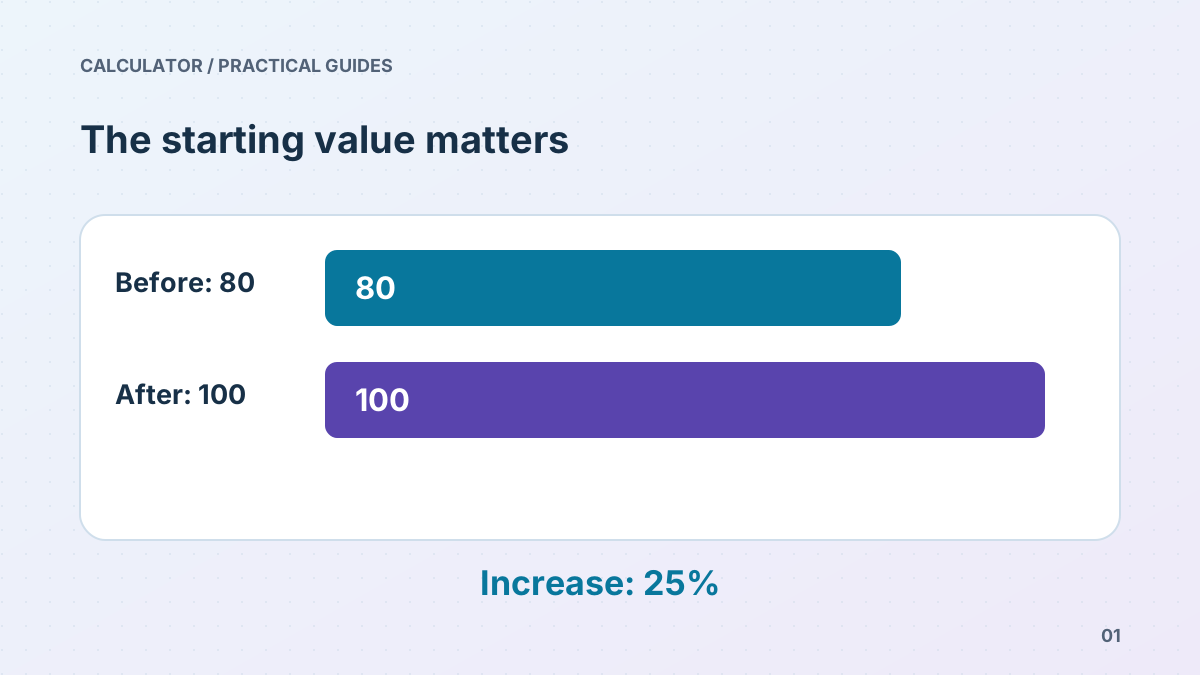
Percentage Change: Why the Starting Number Matters
Calculate an increase or decrease, distinguish percentage points, and understand why reversing a change gives a different percentage.
Read the guide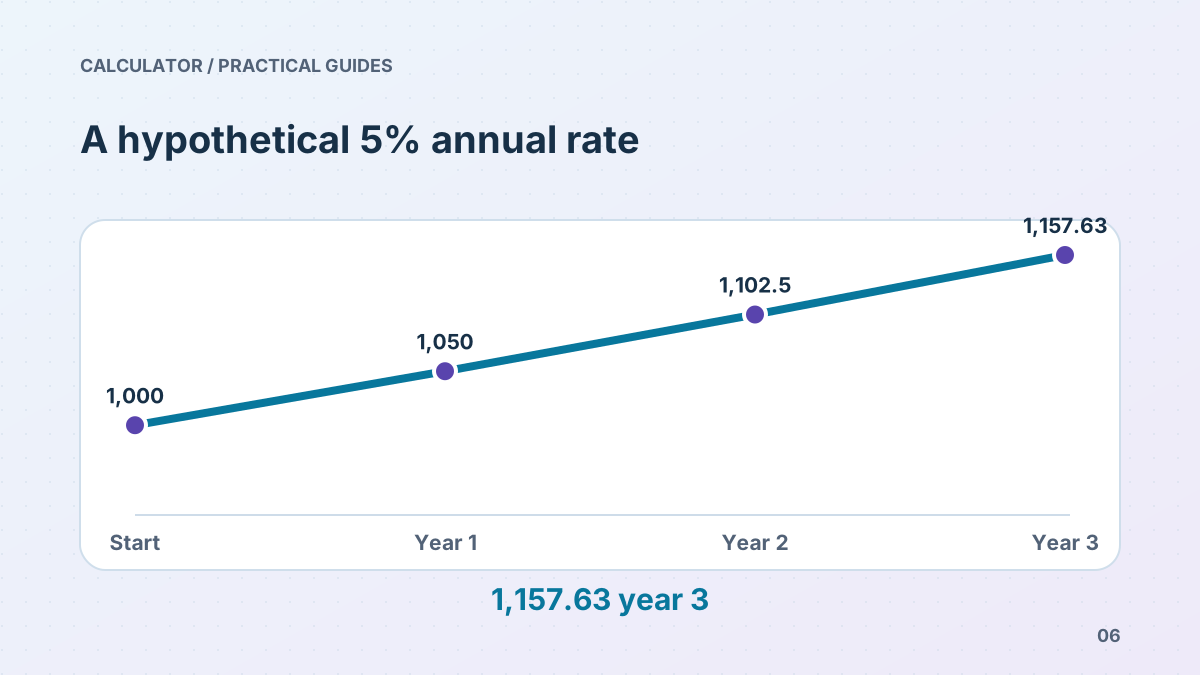
Simple and Compound Interest: Follow the Balance Year by Year
Compare simple and compound interest with a hypothetical fixed-rate example, and separate a model from a promised return.
Read the guide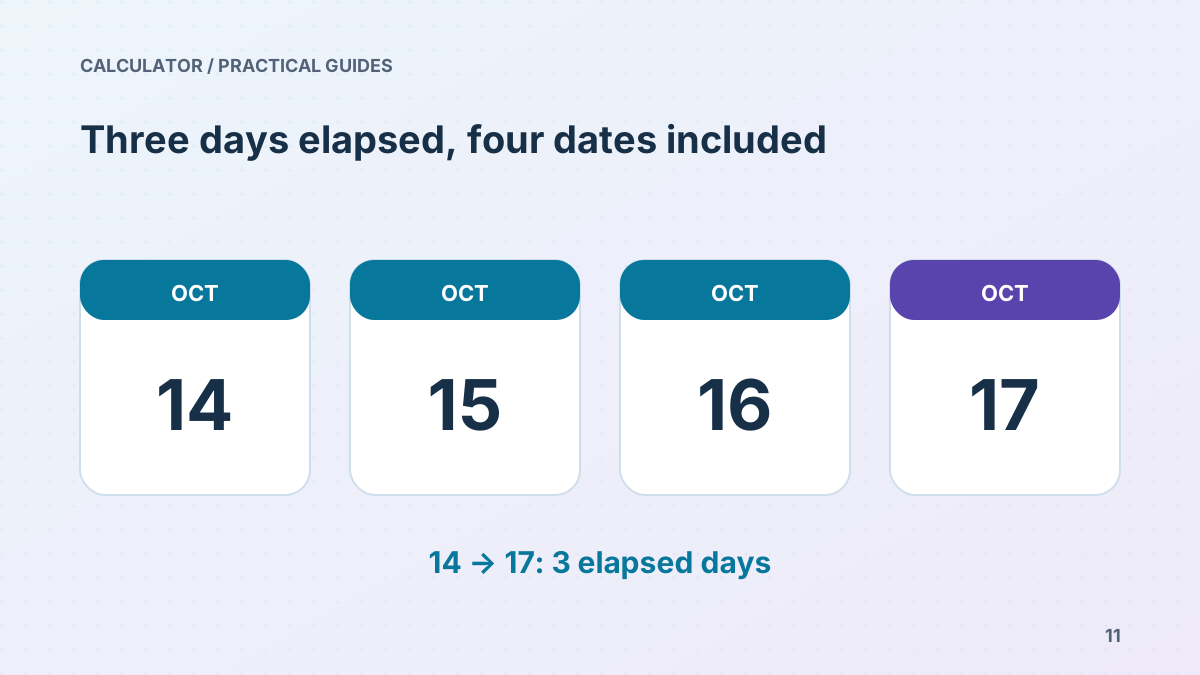
Days Between Dates: Elapsed Days and Inclusive Counts
Choose whether to include both endpoints, distinguish calendar days from working days, and check a simple date interval.
Read the guide